Chakra Overview —
The word chakra comes from Sanskrit, an ancient Indian language, and means “wheel.” Chakras are energy centers within the body, each associated with a color of the rainbow and a unique form of energy. These energies are closely connected to the endocrine and nervous systems and operate at different speeds and vibrational frequencies.
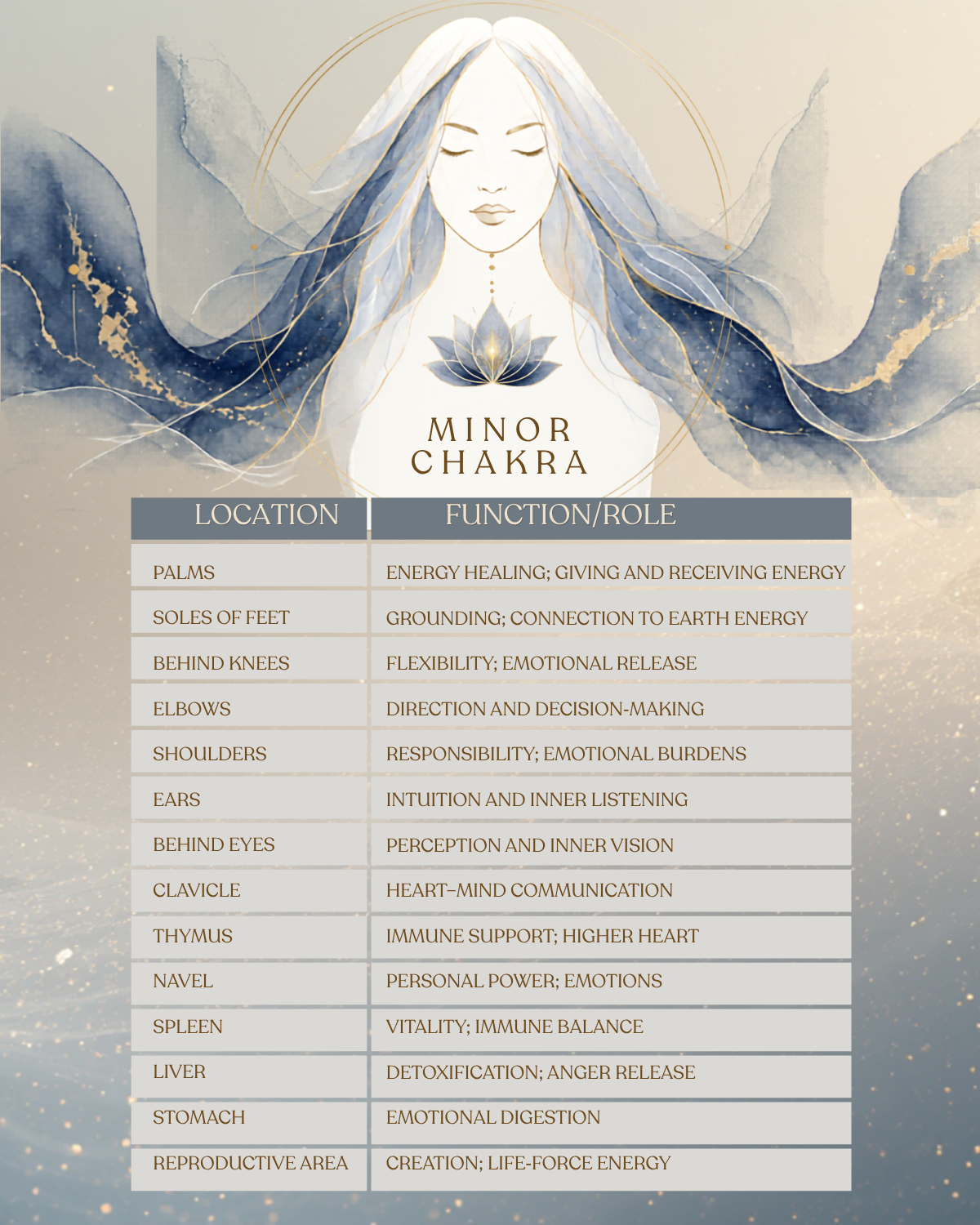
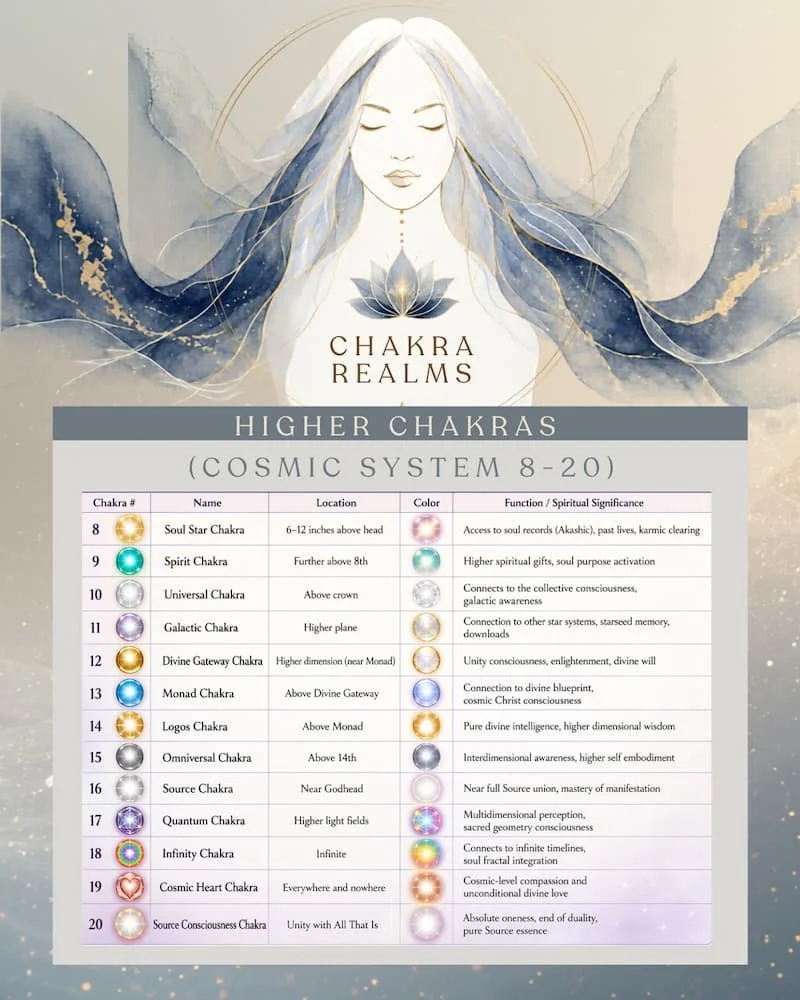
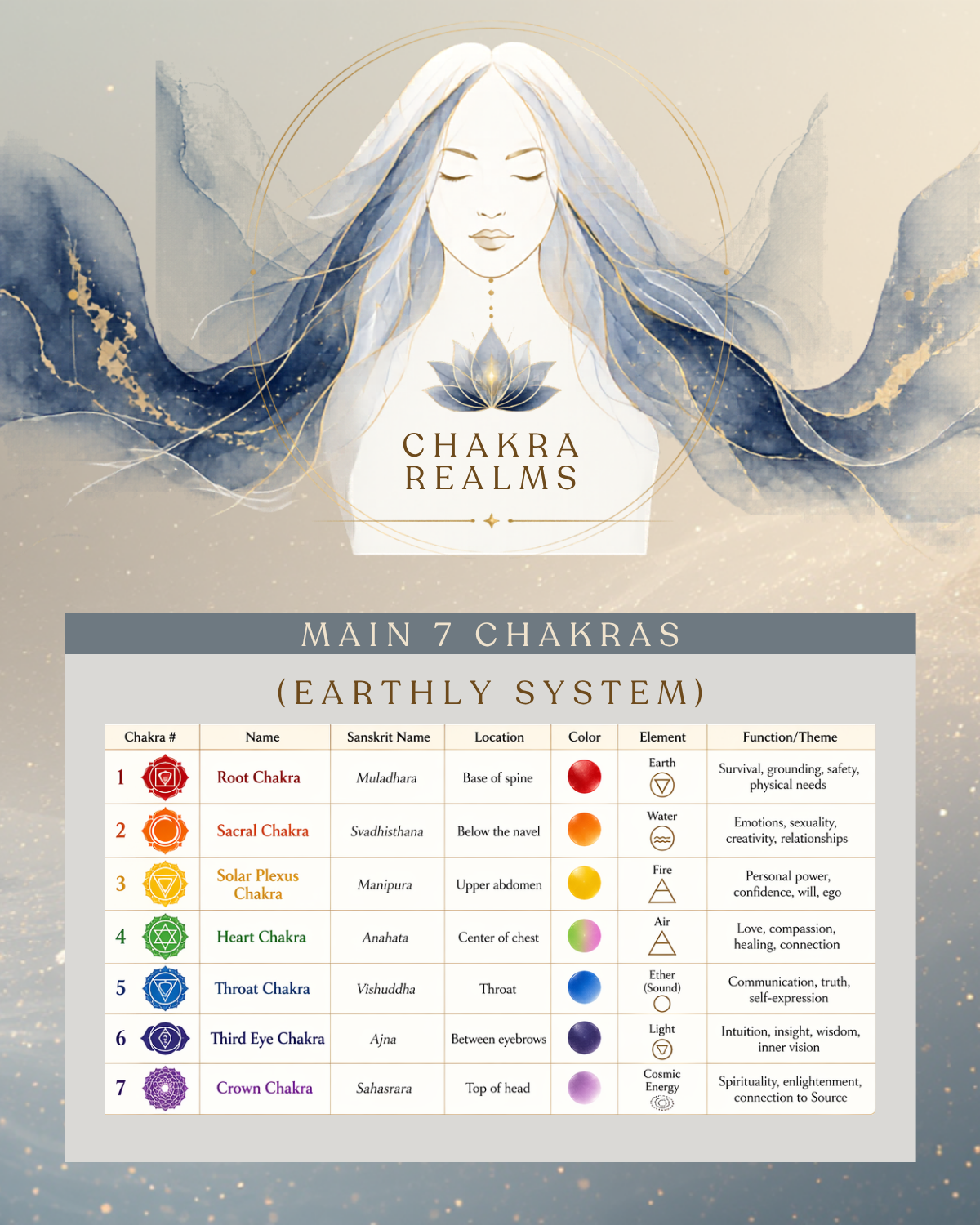
There are seven main chakras, aligned from the base of the spine to the top of the head, along with 21 minor chakras distributed throughout the body. Chakras can be understood as spinning wheels or whirlpools of energy that regulate the flow of consciousness into and out of the body, carrying the subtle energy often described as the soul’s spiritual information.
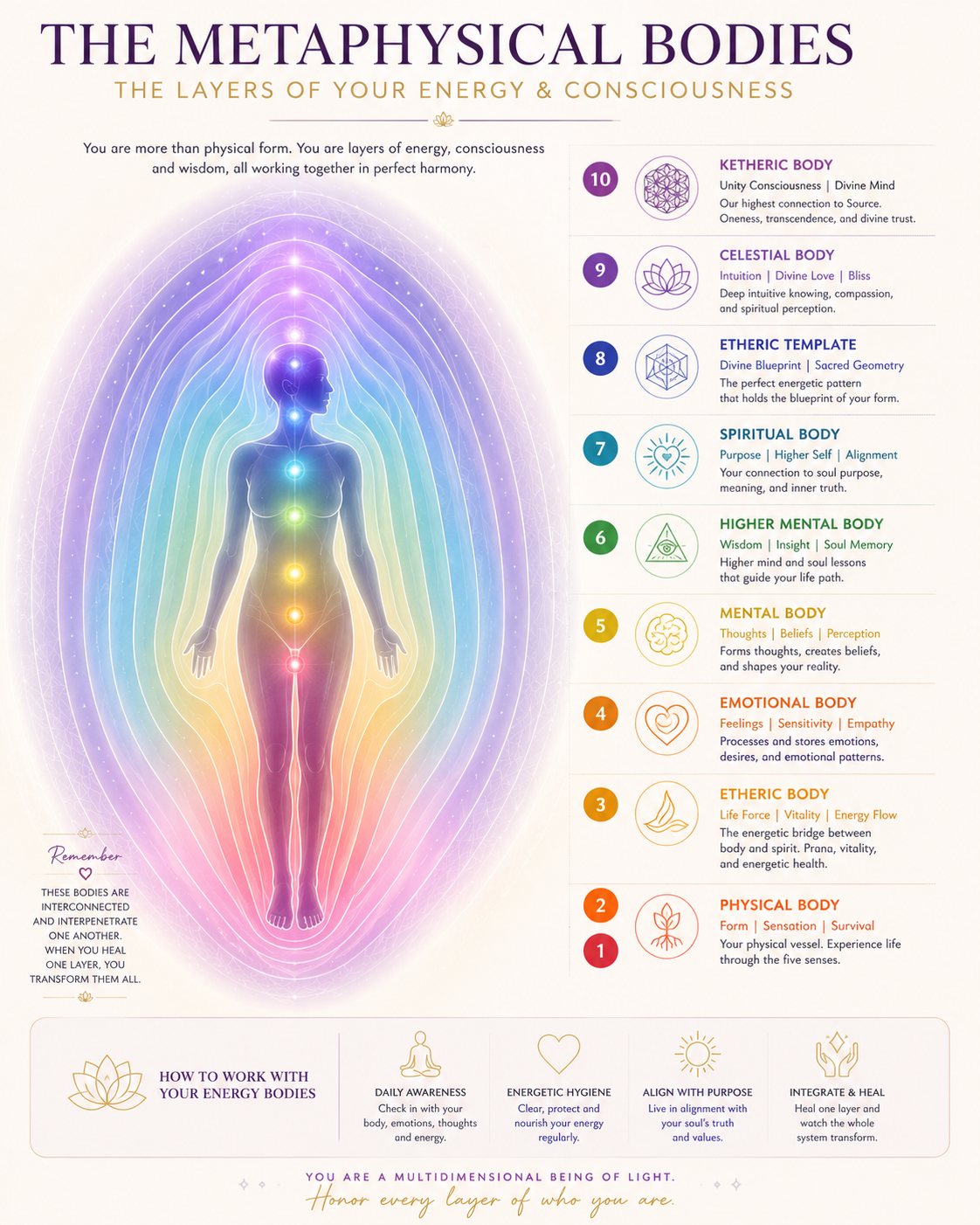
These energy centers are in constant motion, generating the aura—an energetic field that surrounds and permeates the body. The aura is made up of seven layers, each associated with a specific color and spiritual function. Within this system are energetic pathways called nadis, which connect the chakras and allow energy to flow throughout the body.
Each chakra spins at its own frequency, supporting the body’s major systems, including the metabolic, glandular, immune, nervous, circulatory, digestive, reproductive, and musculoskeletal systems. The balance and harmony of these energy centers play a vital role in overall well-being.
The seven main chakras also have both front and back aspects. The front relates to emotional expression and experience, while the back is connected to willpower and action—the foundation of how we move through life. The upper three chakras are especially linked to higher mental functions such as reasoning, intuition, and spiritual awareness.
Chakras can become imbalanced or blocked due to emotional stress, trauma, fear, conflict, or anxiety. When energy flow is disrupted, it may contribute to physical discomfort, emotional challenges, or a sense of disconnection. Maintaining healthy, balanced chakras supports our physical health, emotional stability, and spiritual growth.